Enter a world where Time Magic (fueled by Time Crystals and True Names) meets the end of existence. The Rogue Gods series follows the journey of Guerren (an ex-god of war), Argeaneal (a fallen angel librarian), and Rosalie (a witch) as they battle the Adversary (also known as Samiel or the Morningstar).
START THE ROGUE GODS TRILOGY HERE
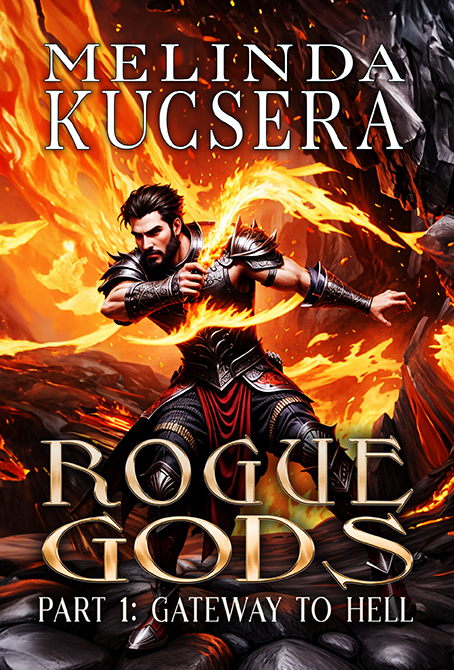
Gateway To Hell
Book 1
When an ex-god steals a spell from a library in Hell, he triggers a chain reaction that splits the timeline and unleashes a demon invasion on Earth. Only an unlikely hero, who remembers a version of her life without demons, stands between the remnants of humanity and the end of the world.
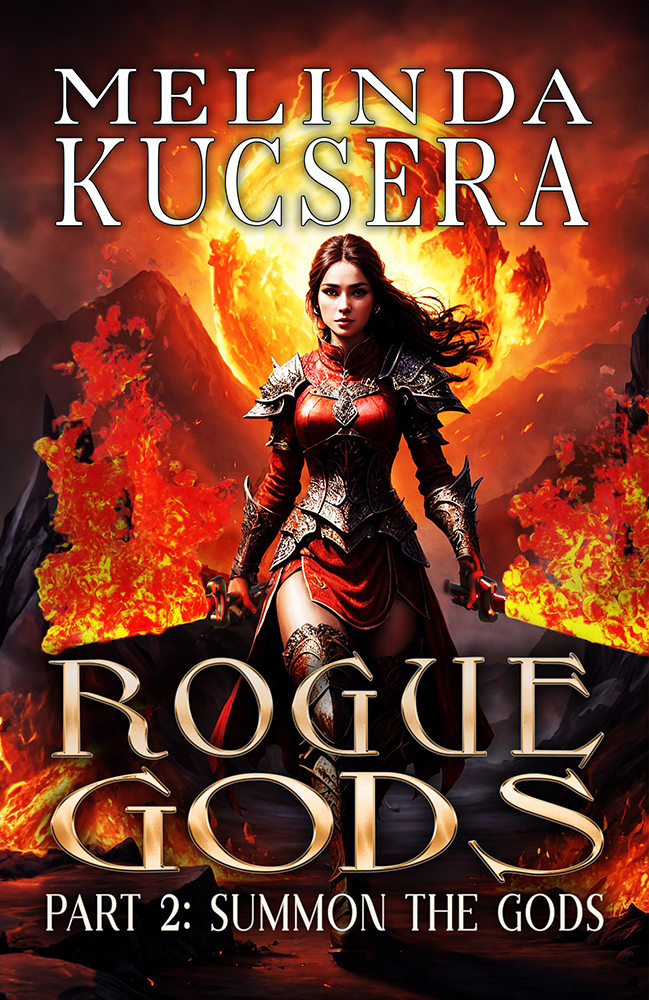
Summon the Gods
Book 2
Trapped in a breaking past, Rosalie and the time-walker Evarian must race to stop a mad goddess from using a Time Crystal to destroy the timeline. As their existence begins to fade, they must prevent a catastrophic summoning ritual or face the total erasure of the future.
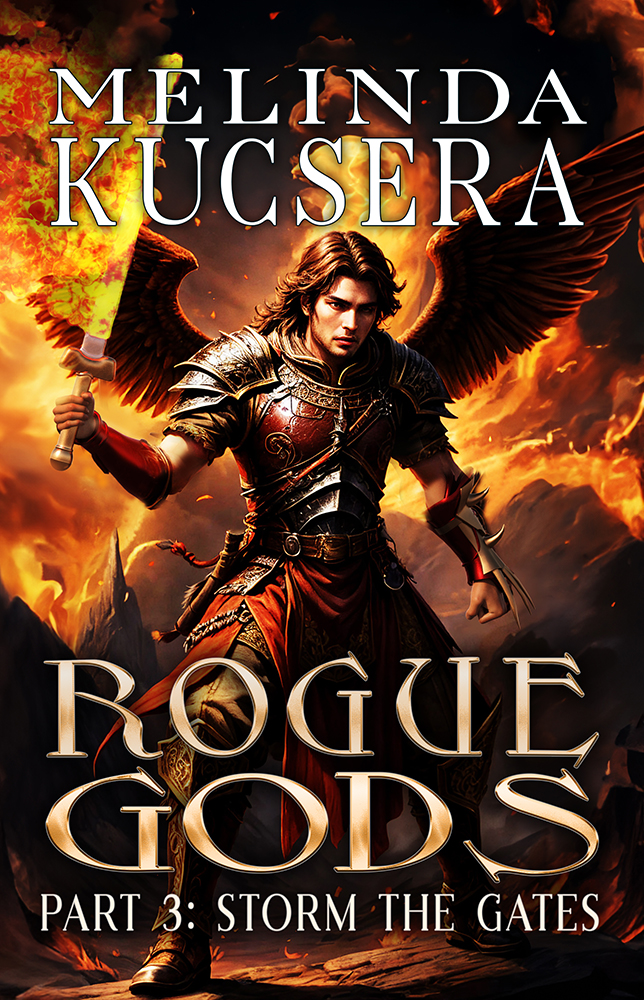
Storm the Gates
Book 3
As the Adversary gathers Time Crystals to unmake all of creation, a chaotic alliance of angels, ex-gods, and mortals must storm the gates of Heaven and Hell to stop him. To save existence, Rosalie must make the ultimate sacrifice to reset the shattered timeline, even if it means erasing herself from the world she saves.
About the Rogue Gods Trilogy’s World
What is the magic system in the Rogue Gods Trilogy?
The series features a complex, multi-faceted magic system where different beings access power in unique ways. Key components include:
- Time Magic: This is central to the plot. It involves Time Crystals, which are shards of the original creation that anchor time. They can be used to manipulate time, such as slowing it down for enemies while speeding it up for the user. There are also Time Walkers (like Evarian and his family of ex-gods) who can travel backward or forward in time, though this is dangerous and restricted.
- True Names: Knowing a being’s “True Name” grants absolute power over them. This is a primary weapon for Argeaneal, who can read these names and use them to command demons and fallen angels.
- Blood Magic: Used primarily by Rosalie, a witch. By cutting herself and manipulating her blood, she can create weapons (like spikes or swords), armor, or bind people to her will.
- Wish Magic: Wielded by Ran, a mage. He uses white stones (lumir crystals) to anchor wishes, making things happen such as banishing demons, creating barriers, or summoning people. His magic is powered by his own energy or the stone’s charge.
- The Unseen: A dark fabric of reality that underlies the physical world. Characters like Laylah (the Sleeping Angel) and N’talli (a Versati) can manipulate these “threads” to spy, communicate telepathically, or weave spells.
- Angelic & Demonic Powers: Angels and Fallen Angels possess inherent abilities like flight, healing light, and “glamors” (illusions). Versati (shapeshifters) can drain energy from others, cast illusions, and change their physical form.
How does the magic system in the Rogue Gods Trilogy work?
Magic generally requires a source of power or a catalyst.
- Cost: Magic often drains the user’s energy. Ran, for instance, must be careful not to overexert himself.
- Tools: Lumir crystals are used to store magic and anchor spells. The Book of Names is a powerful artifact that reveals true names.
- Mechanics: Time magic operates on the principle of balance; slowing time for one group speeds it up for another. Blood magic requires physical sacrifice (cutting oneself). Wish magic relies on visualization and intent.
Is the Rogue Gods Trilogy appropriate for Young Adults?
Yes, the series appears appropriate for Young Adults (YA).
- Genre: It is described as a “twist[y] epic fantasy adventure” and “high-fantasy action/adventure”.
- Content: The tone involves magical combat, demons, and high stakes (saving the world), which are standard for YA fantasy. There is violence (stabbings, battles), but the text provided does not contain explicit gore or sexual content.
- Themes: It focuses on friendship, redemption, family dynamics, and finding one’s place in the world. The “About the Author” section notes the books have a “Christian bent”, often implying a lack of explicit content.
Who are the main characters?
The trilogy revolves around a diverse ensemble cast:
- Guerren: An ex-god of war who is snarky, lost his powers, and is trying to regain his glory and lead an army.
- Argeaneal: A fallen angel who runs the Library of Forbidden Knowledge in Hell. He is bookish, brooding, and discovers he may not be as “fallen” as he thought.
- Rosalie: A determined witch who gets caught up in the timeline struggle. She uses blood magic and eventually becomes an anchor for the present.
- Evarian: A demigod and Time Walker searching for his uncle and trying to fix the timeline.
- N’talli: A Versati (shapeshifting demon) who befriends the group and seeks a place where they belong.
- Ran: A powerful young mage with “wish magic” who is often cheerful and talkative.
- The Angels: Thaniel (a warrior angel with a hammer) and Ezariah (a sailor angel) who help the protagonists.
- The Antagonist: The Adversary (also called Samiel or the Morningstar), who seeks to destroy time and creation.
What genre and tropes are in the Rogue Gods Trilogy?
Genre:
- Epic Fantasy, High Fantasy.
Tropes:
- Found Family: A disparate group of angels, demons, ex-gods, and humans coming together.
- The Quest: Characters must travel to Hell, the Gray Between, and the past to save the world.
- Time Travel/Alternate Timelines: The plot heavily relies on fixing a broken timeline and dealing with alternate versions of characters.
- Gods and Angels Walk Among Us: The cast includes active gods, ex-gods, and angels interacting with mortals.
- Good vs. Evil: A clear battle against a “Dark Lord” figure (The Adversary).
Do I need to read the Rogue Gods books in order?
The books form a continuous trilogy with a specific chronological order:
- Rogue Gods: Gateway to Hell
- Rogue Gods: Summon the Gods
- Rogue Gods: Storm the Gates
The story arcs, character development, and the central conflict regarding the timeline and the Adversary evolve directly from one book to the next. Additionally, the author notes that events in these books crossover with her other series (Curse Breaker and His Angelic Keeper), so reading those might provide extra context, but the trilogy itself has a set order
What to read next?
Finished the Rogue Gods Trilogy? Start the Curse Breaker Series next.

 Melinda Kucsera - USA Today Bestselling Author of Epic Fantasy Adventures
You must be logged in to post a comment.